Agricultural tractors and heavy equipment represent the most significant capital investment in modern farming and industrial operations. Maximizing the lifespan and operational efficiency of these machines is not merely a matter of checking the oil; it requires a deep, systematic approach to preventive and predictive maintenance. In an era where a single high-horsepower tractor can cost upwards of half a million dollars, minimizing downtime during critical planting or harvesting windows is the ultimate goal of any serious fleet manager or owner-operator. This comprehensive guide outlines the professional standards required to keep these behemoths running at peak performance.
The Evolution of Heavy Diesel Engines
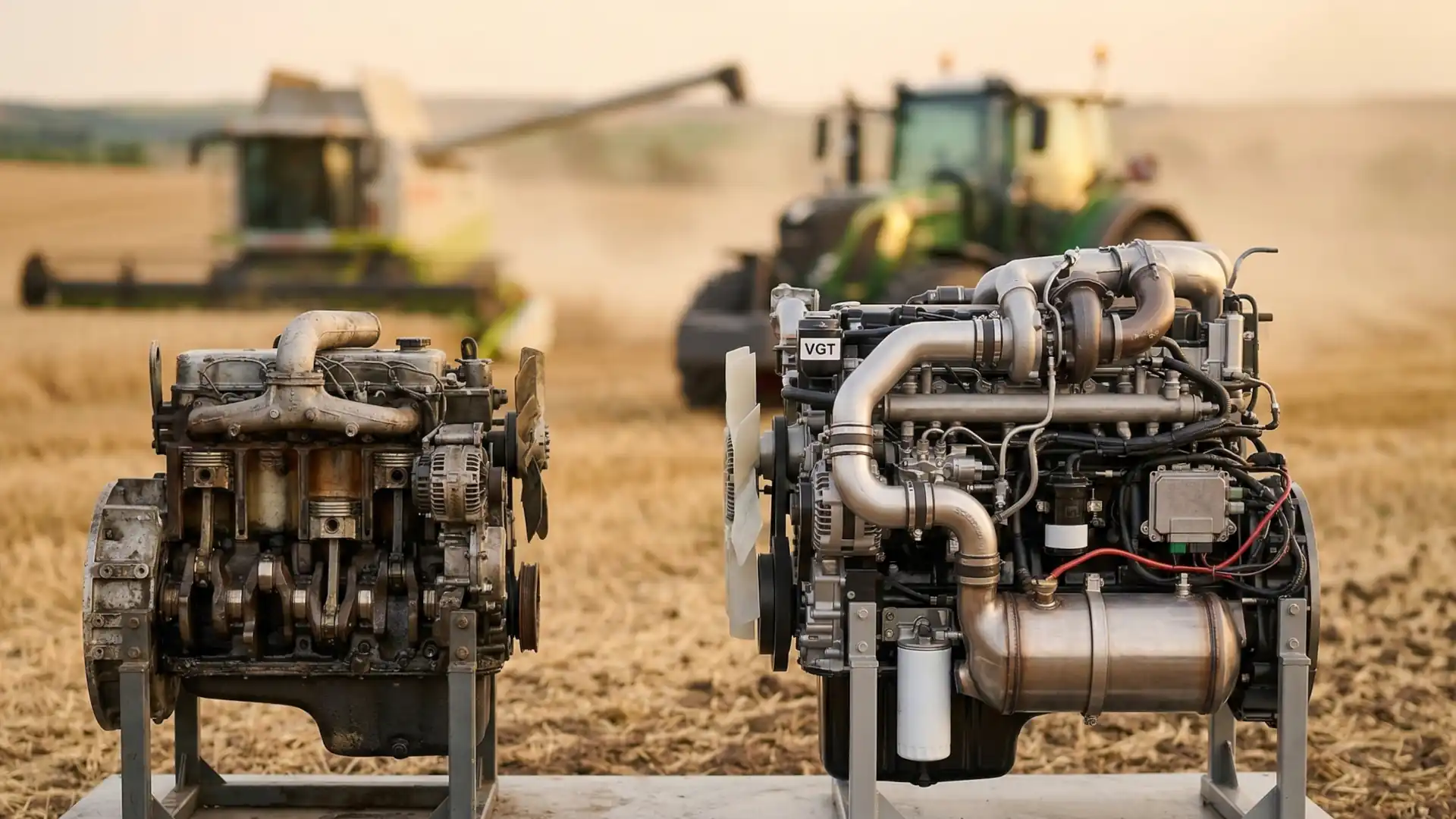
The beating heart of any agricultural machine is its diesel engine. Over the past two decades, strict global emission regulations have completely transformed engine architecture. The transition from traditional mechanical fuel injection to High-Pressure Common Rail (HPCR) systems means that today's engines operate at mind-boggling fuel pressures—often exceeding 30,000 PSI, similar to technologies pioneered by industry giants like Cummins and Bosch. This microscopic precision demands absolute fuel cleanliness. Even microscopic water droplets or particulate matter can act as a plasma torch, destroying injector nozzles in seconds. Consequently, maintaining the fuel delivery system, regularly draining water separators, and monitoring fuel lubricity have become paramount for engine survival.
Furthermore, exhaust aftertreatment systems—including Diesel Particulate Filters (DPF), Diesel Oxidation Catalysts (DOC), and Selective Catalytic Reduction (SCR) systems—require their own specialized maintenance protocols. Using the correct low-ash engine oils (CJ-4 or CK-4 ratings) and ensuring the proper dosing of Diesel Exhaust Fluid (DEF) are non-negotiable practices to prevent catastrophic derating of the engine or severe DPF plugging.
Advanced Hydraulic Systems and Fluid Power
Modern tractors are effectively mobile hydraulic power plants. They rely on Closed-Center Load-Sensing (CCLS) hydraulic systems equipped with variable displacement axial piston pumps. These systems are incredibly efficient, delivering flow only when demanded by the steering, brakes, or attached implements. However, this high efficiency comes with extreme sensitivity to fluid contamination and thermal degradation, a principle well documented by fluid power experts at Parker Hannifin.
Digital Diagnostics and the CAN-Bus Network
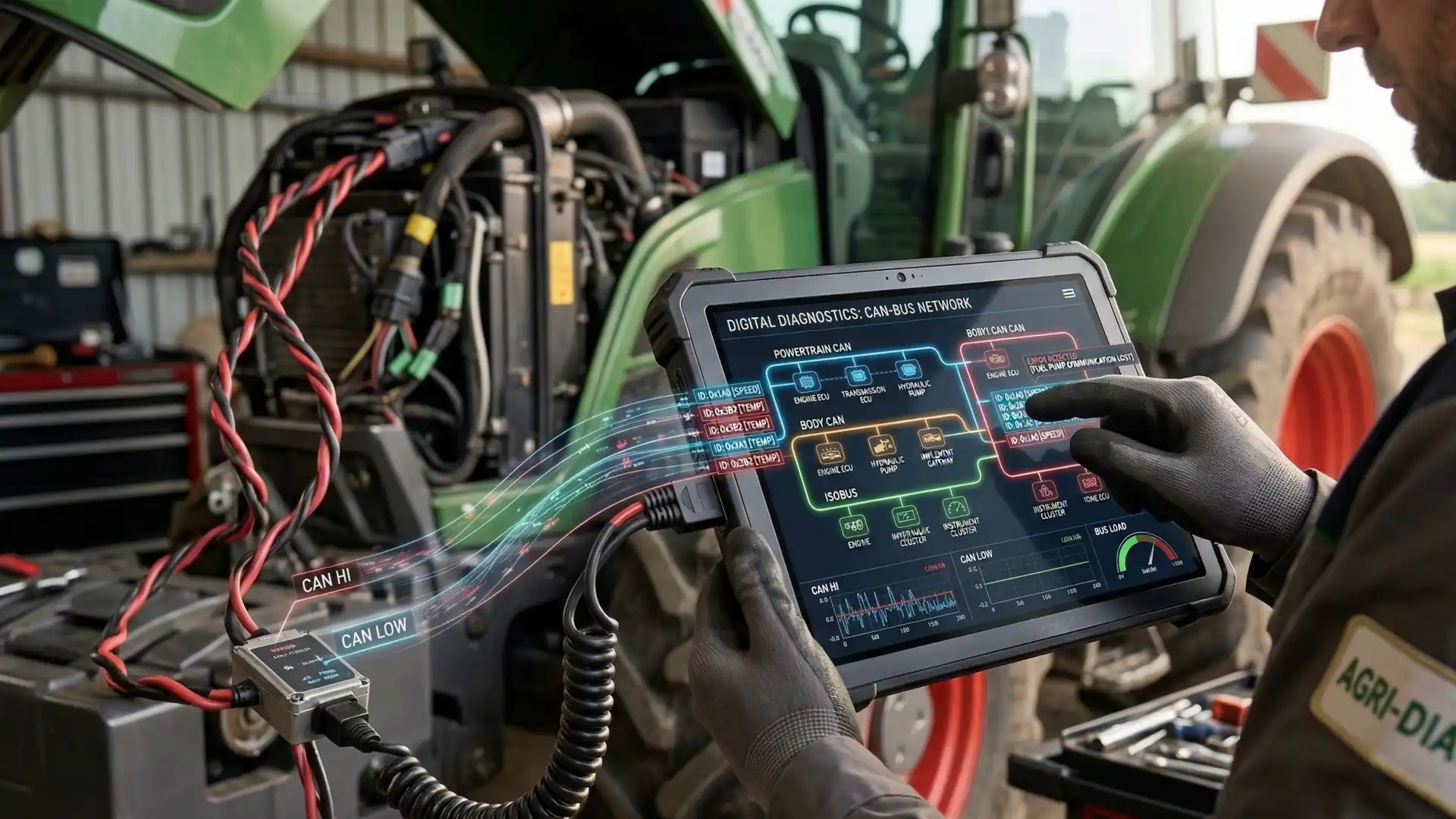
Gone are the days when a mechanic could diagnose a tractor with just a wrench and a good ear. Today's machines are essentially rolling server racks, featuring dozens of Electronic Control Units (ECUs) communicating constantly over a Controller Area Network (CAN-Bus). From optimizing transmission shift points based on engine load to managing GPS-guided auto-steer functions, electronics control absolutely every aspect of the machine's behavior in the field.
When a fault occurs, technicians must rely on sophisticated diagnostic software, multimeters, and oscilloscopes to trace communication errors, voltage drops, or sensor drift. A seemingly major transmission issue can often be traced back to a single corroded pin in a wiring harness or a failing speed sensor. Understanding this digital architecture is crucial for modern troubleshooting and prevents the costly mistake of replacing parts unnecessarily.
Power Transmission: From Flywheel to the Dirt
Transmitting 400+ horsepower from the engine to the ground requires incredibly robust drivetrains. Continuously Variable Transmissions (CVT) and full-powershift gearboxes utilize complex arrays of wet clutches, planetary gear sets, and synchronizers. Maintaining these highly stressed systems requires strict adherence to fluid change intervals using OEM-approved Universal Tractor Transmission Oils (UTTO), which contain specific friction modifiers to prevent clutch slippage and wet-brake chatter.
Finally, the interface between the machine and the earth—the tires and ballasting—dictates overall efficiency. Improper weight distribution or incorrect tire pressures lead to excessive wheel slip, burning unnecessary fuel and accelerating tire wear. A properly ballasted tractor maximizes draft pulling force while minimizing detrimental soil compaction, ensuring that the engine's power is translated into productive work rather than wasted energy.
Diagnostic & Repair Support
Experiencing issues with your heavy machinery? Submit a ticket and our engineering team will advise.